
ISSUE #1 February-March 2026
Welcome to The Great Deep newsletter!
Our goal is to have items of interest both to newcomers and to "old hands" who have been reading about HPT for many years. We'll try to keep you up-to-date on news that is buzzing about the HPT community.
If you have friends or family who might enjoy receiving the newsletter, send a quick note directing them to hydroplate.org.
New to Hydroplate Theory? You can watch a very short video introduction by clicking here.
UPDATE on the 9th edition of "In The Beginning":
The hardback book is almost ready! You can pre-order your copy HERE.
NOTE: The pre-order price is slightly higher than the regular order price because you are also paying for the guarantee of receiving a copy before the first printing is sold out.
AND: The ITB flip-book is already here:
You can now read the 9th edition online: creationscience.com
NOTE: New format is that you are required to enter your email address to view the online flip-book, to help keep the site secure. Thank you!
THANKS TO EVERYONE WHO WAS WORKING ON RENEWING WALT'S WEBSITE (creationscience.com) FOR THE PAST FEW MONTHS. Your work is greatly appreciated by everyone!

COMING SOON...

Kevin Lea and selected co-hosts will teach the Hydroplate Theory, chapter-by-chapter, based on the 9th edition of Dr. Walt Brown's book, In the Beginning - Compelling Evidence for Creation and the Flood. More details in the next issue!
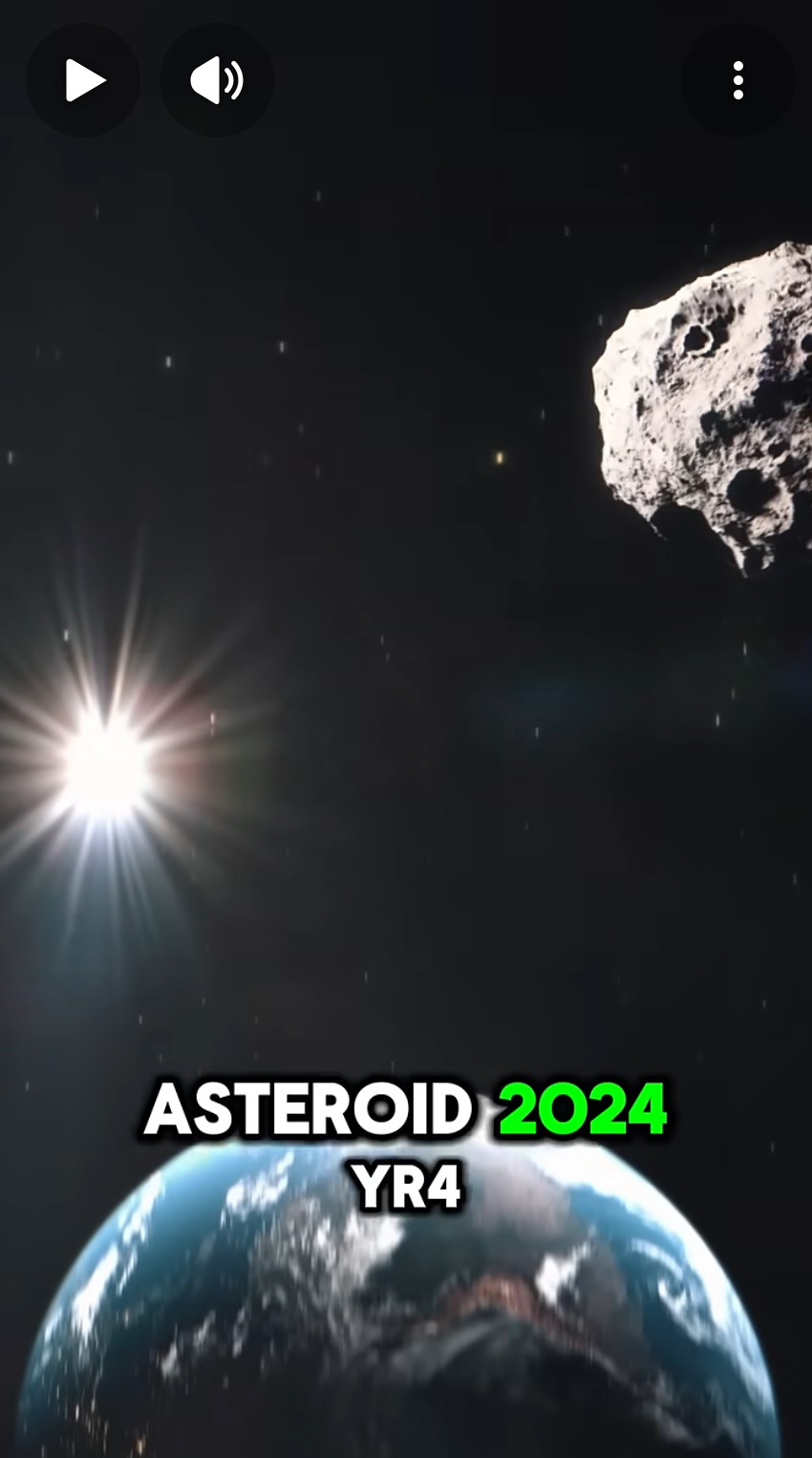
"SHORT" of the MONTH: Sometimes we feature a secular scientist making laughable statements, but this month we are featuring a short about asteroids made by a young HPT advocate. 80K views already!
Catch up with last issue's Short of the Month:
Our favorite science gal, "Astro Alexandra" is amazed that they found serpentine on asteroid Bennu. (Serpentine is a metamorphic rock formed when mafic rock (silicates high in Mg and Fe) mixes with seawater. On earth, serpentine is found mainly on the Mid-Ocean Ridges, plus a few places on the surface.) We were not surprised, Alexandra! Bennu is made of water, rocks and organic material that were spewed out by the Fountains of the Great Deep. CLICK HERE TO WATCH
NEW VIDEOS:
Kevin Lea interviewed on "Revolution Against Evolution" youtube channel (posted 2-28-26)
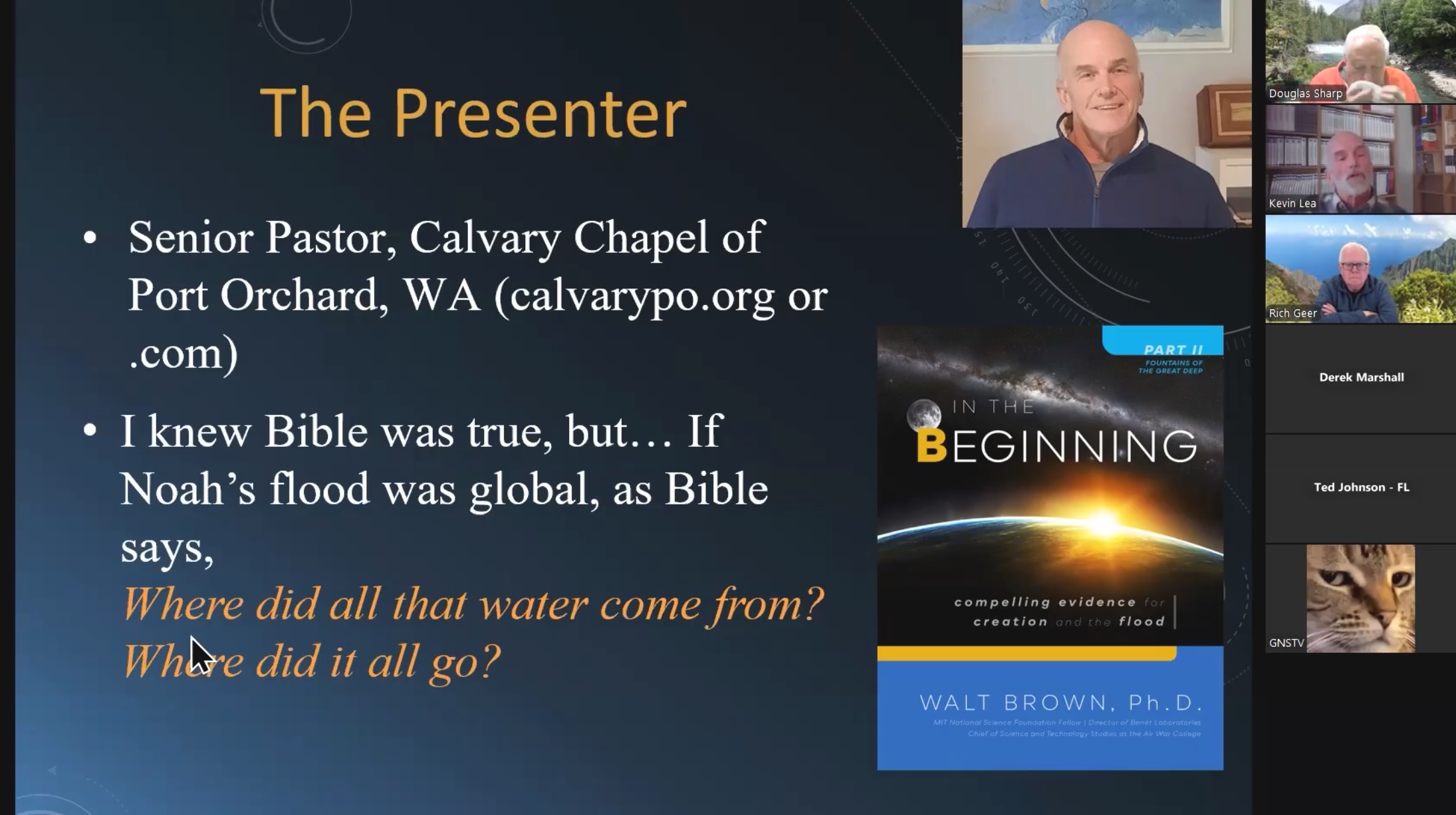
Brian Lauer talks HPT on Real Science Radio (Jan. 16, 2026) (Also available as radio show on rsr.org)

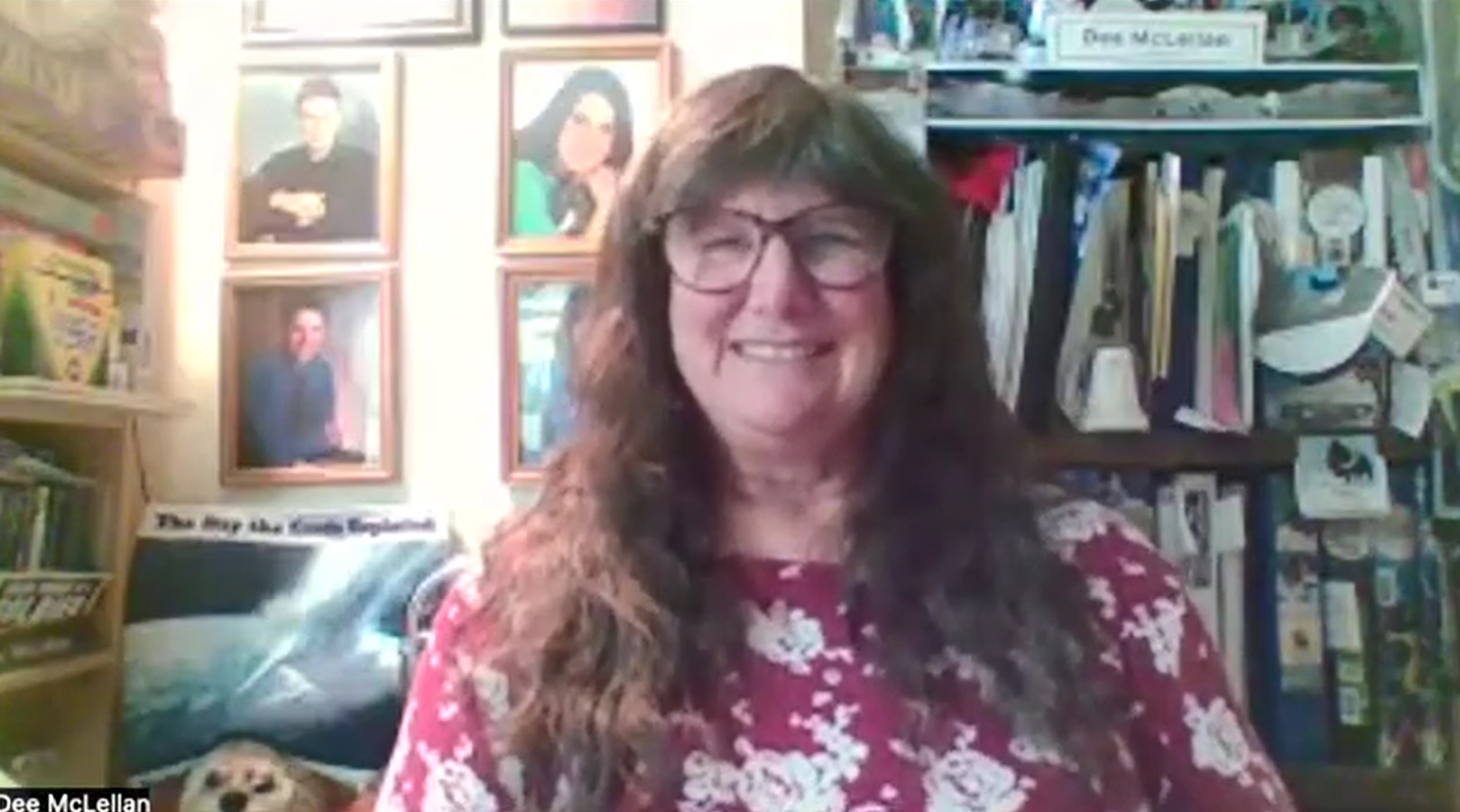
FEATURED HPT SUPPORTER: Dee McLellan (interview from Feb. 2026)
Dee is a long-time HPT supporter and has known the Browns since Walt's early days of doing speaking tours. Dee works as a science teacher as well as being involved in NASA's outreach education programs. Few people can match Dee's sparkle of enthusiasm for both teaching science and learning about HPT. You'll enjoy this interview as she shares her personal experience with Dr. Brown and with teaching HPT. CLICK HERE TO WATCH, or click the image below.
NASA NEWS: NASA finds aluminum clays on Mars (reported on Real Science Radio 2-7-26)
NASA reports the discovery of a rock containing clay minerals that could only have been created in a rain forest environment. The clay in question is called kaolinite and only shows up after hot, wet, rainforest-level weather melts everything else out of the rock. When researchers analyzed this rock, they found it to be exactly like some rocks found in South Africa and San Diego. NASA is mystified as to how this rock could possibly be on a cold, dry, dead planet. Not being familiar with Hydroplate Theory, they had to conclude that Mars once had a tropical climate. / HPT advocates know that this clay-containing rock came from Earth. The Fountains of the Great Deep spewed rocks and water into space, and some of them ended up on the moon and on Mars. We are not surprised at this finding. In fact, we love this finding because it confirms that: All Scientists Work For Walt Brown!
For more information about water on Mars, you can read pages 360-363 in the 9th edition of In The Beginning (ITB). Dr. Brown explains that water was delivered to Mars from Earth, when water from the Great Deep (the chamber under the crust) spewed water (and rocks) into space. The water and rocks consolidated into comets and asteroids, and a sufficient number hit Mars to create its curious (now dry) stream beds. Water also pooled and then froze in craters, and much of the water soaked into the topsoil where it remains to this day. Mars is far too cold to be able to have water on its surface, so these water events must have had an unusual origin and are not part of any on-going hydrological cycle. Astronomers are baffled at discoveries that suggest there is a lake of liquid water a mile under the surface of Mars' south pole. There is no known mechanism to explain this. The HPT proposes that comets (which are 38% water) hit Mars with great force, forming a crater and releasing liquid water. The surface of this water quickly froze, insulating the water under it. Debris from the impact then began raining down on this frozen surface, further insulating the liquid water below. Dust and debris eventually covered the crater, leaving a mysterious deep lake of (salty) liquid water. This must have happened in the recent past, or this deep water would have been frozen by now. / Even more shocking is ice on Mercury! How could this extremely hot planet have ice? The answer is on page 310 of ITB 9.
If you are still waiting for the 9th edition, you can get a head start by watching the video on the Origin of Comets and Asteroids on Bryan Nickel's HPT channel: https://www.youtube.com/@BryanNickel_Hydroplate
NEW ARTICLE: Submitted by Jane Albright, published on hydroplate.org
Are Major Creation Organizations Abetting the Evolutionary Lie?
“Truthfully, we really didn’t expect to find anything from the inner solar system. Instead, it showed up in the second particle we looked at…” So stated University of Washington Professor and Principal Investigator, Donald Brownlee, Ph.D., in 2006, discussing results of Stardust Mission samples taken from Comet Wild 2. “Among the biggest surprises, Brownlee said, was finding material that formed in the hottest part of the solar system.”i
Twenty years and several space missions later, astronomers continue to be baffled by what they find on asteroids and comets, findings that belie evolutionary theories about the formation of our universe. For example, the Big Bang model cannot explain how an asteroid, previously thought to be a solid rock, could instead comprise a “rock pile,” a loosely-packed aggregate of many smaller rounded boulders;ii,iii how contact binary asteroids could possibly formiv or how they could have moons.”v,vi Evolutionists are also at a loss to explain how Mars could contain complex organic molecules, which could not possibly form under the conditions that exist on the planet.vii
Most recently, samples taken from asteroids Bennu and Ryugu reveal the presence of a variety of amino acids, including 14 of the 20 used by living things on earth to make proteins; ammonia; formaldehyde; other carbonaceous compounds; various salts and minerals, some which form only in extremely hot temperatures; and all five nucleotides that make DNA and RNA, found in every living cell on earth. viii,ix,x
Unsurprisingly, evolutionists point to the presence of organics in space as evidence that life on earth was somehow “seeded” by an astral body in the far distant past, an idea referred to as “panspermia.” xi, xii Panspermia provides a felicitous rescue device for evolutionists, as they now realize that 4.5 billion years, the purported age of the earth, is insufficient time for random chance to produce the complexity and diversity of life on our planet today. Missing from their narrative, however, is any discussion of how these amino acids and nucleotides could self-assemble in the vacuum and near absolute zero temperature of space. Even on earth under controlled, ideal conditions, all experiments attempting to demonstrate abiogenesis have failed.xiii,xiv
What has been the mainstream creationist response to these remarkable discoveries?
Scientists at Answers in Genesis (AiG) and The Institute for Creation Research (ICR) acknowledge the presence of organic chemicals in space and provide compelling reasons for why these discoveries do not explain how life began. However, they provide no explanation for any of the dozens of unusual findings except to state that all must have been part God’s original creation.xv,xvi This means they believe that God created these orbital bodies with the building blocks of life (as well as other mineral compounds and even bacteria found on earth). They should also acknowledge that this means God created asteroids with evidence of abundant liquid salt water at some time in the past, and in a near perfect vacuum and near absolute zero temperatures. It is natural to ask why God would do so, especially since evidence of life on astral bodies would bolster the God-denying evolutionary paradigm. Also, how could asteroids have been part of God’s “very good” creation when they have caused great destruction on earth in the past and may in the future?xvii,xviii
In a recent Answers in Genesis (AiG) video, They Found HUMAN DNA on a Distant Space Rock?, Dr. Georgia Prudom states that although the components of proteins, DNA, and RNA have been found in space, the evidence for actual life in space is non-existent. Host Bryan Osborne states, “life has never, ever been found, never, ever been observed in space” (time stamp 1:40).
Except it has. Numerous studies have reported the presence of microorganisms within chondritic meteorites and were found on samples taken from the asteroid Ryugu.xix,xx
In contrast, the Hydroplate Theory (HPT) posits that comets, asteroids, meteoroids, and trans-Neptunian objects (TNOs) comprise material that came from earth, forming in space under known laws of orbital physics from water and debris that was explosively ejected from the earth during the cataclysm that initiated the flood: “In the six hundredth year of Noah’s life, in the second month, the seventeenth day of the month, on that day all the fountains of the great deep were broken up, and the windows of heaven were opened. And the rain was on the earth forty days and forty nights” (Genesis 7:11-12 NKJV). Any organic material entrained in the ejecting fountains would have been pulverized, leaving on comets and asteroids a trail of evidence of their origin. Pastor Kevin Lea describes the HPT view here. With this understanding, HPT advocates can not only explain these recent discoveries, but Walt Brown and others have successfully predicted many of the recent findings that have so perplexed both secular and most creationist astronomers.xxi
Those who know about the HPT are equipped with a biblical and scientific explanation for the flood and its consequences, including comets and asteroids, and the many other recent scientific discoveries on earth and in space that astound the secular scientists.
Tragically, the major creation organizations refuse to acknowledge that comets and asteroids are of terrestrial origin and a consequence of the global flood. Instead, most continue to promote Catastrophic Plate Tectonics, an easily-refuted theory that also conflicts with the Bible, while censoring the HPT. By failing to defend biblical creation and the flood with the best available arguments, they are in fact abetting the evolutionist.
In the meantime, scientists continue to be shocked by findings that indicate a history of liquid water on Bennu and Ryugu, even stating that both asteroids must have come from the same (unknown) “watery world.”xxii,xxiii,xxiv
They are right. We call this watery world “Earth.”
RAQ's (Recently Asked Questions)
In this section we will answer some questions that people have asked. (Thanks to Bryan Nickel for helping with the answers to this issue's questions.)
Q#1: Isn't the discovery of olivine in meteorites evidence against HPT? I think I read this in CRSQ.
A: No. In fact, HPT predicts that olivine will be found in asteroids and meteorites. Olivine is assumed to be one of the main mineral ingredients in mantle rock. Much of the mantle rock was crushed and expelled during the initial stages of the bursting of the fountains of the Great Deep. Crushed olivine would have been swept up by the pulsing water and expelled into space, along with water, pulverized crustal rock, pulverized organic material, and possibly even molten metals. // For a thorough answer to this question, you can check out the interview that Real Science Radio did with Kevin Lea, one of our HPT experts. Click here: https://www.youtube.com/watch?v=0pHzRm40ykI
Q#2: I know that the magma was produced by shearing as the Atlantic went up, and the Pacific side collapsed. Magma below the cross-over depth went downwards towards the core and compressed and began a runaway process of shearing. The iron-nickel core formed, also an inner liquid mantle, but the outer mantle stayed solid. Then the process was stopped on a large scale, otherwise the whole mantle would have long gone liquid. What stopped that process?.
A: The rising of the Atlantic floor was purely due to imbalance of forces induced by gravity. Once the Atlantic floor began to rise the process of shearing and essentially “extruding” the inner earth from the Pacific toward the Atlantic began. However, the Atlantic floor rose only to the point where it had essentially moved up into the location where the granite crust had once been. Once it did this, equilibrium was achieved and forces were once again balanced so further movement “up” couldn’t continue to happen. Therefore the inner earth’s large-scale “runaway” shearing and extruding stopped. One thing to note is the term runaway means runaway for as long as an imbalance of forces permits...not unlimited/forever runaway. Consider nuclear detonation of a bomb is a “runaway” fission or fusion process but it only lasts a short time.
Q#3: I am puzzled about liquefaction. The process of separating sediments of different weight by tidal uplifting makes sense. What makes no sense yet is the cementing of the first layers before new layers descend on them. How can such cementation happen under water? Don’t things need to be dry to cement?
A: Precipitation of minerals out of water is not dependent on sediments drying out. Evaporation can play a small role in some cases. The process is much more dependent on whether the liquid is supersaturated with mineral content. If supersaturated, then precipitation is possible. Generally, more mineral content can be dissolved into hot water than cold as well as in high vs. low pressures. Changes toward cooling and lower pressure make supersaturated liquids ripe for precipitation and crystallization/cementing. While temp and pressure can play a role, neither are hard requirements for cementing to occur. Another large factor is chemical reactions of the minerals which are more likely to occur in water than without water. Consider concrete is a supersaturated solution that chemically sets up and hardens while “cold” and without needing to cool or drop in fluid pressure. In fact concrete’s chemical process actually releases heat while reacting and it can set up while completely submerged in water. Keeping concrete submerged in water produces the hardest and best bonded concrete.
Q#4: How can sedimentary lines remain stable to get formed and above, if it cemented when the waters are still turbulent and the ground restless due to the continental shelves bending and fluttering and then also sliding along just to be then violently stopped and forming mountains?
A: As explained above, cementing of layers could begin even while under water. But cementing was not a prerequisite for new layers to form above them. Depth and pressure alone in many cases prevented re-liquefaction of sediment. The deeper a layer was buried the less likely it was to be re-liquefied....unless very large forces and pressures were re-introduced such as HPT’s compression event (mountain building). When I replicated Walt’s liquefaction experiments I noticed that layering (sedimentary lines?) could form whether flow was violent over just once cycle, or whether layers slowly formed over several cycles. So even though previously formed layers may have been destroyed by another future liquefaction event, the nature of the sediments acting once again like a liquid (liquefaction) means more layering could happen.
Another thing that can happen (which I also observed in my experiments) with liquefaction is water lensing where water rising through a column of layers can’t rise up through one of the layers so essentially a water “blister” forms between layers. In this case the layers above the lens are just lifted above the blister and they don’t form into new layers because water isn’t flowing fast enough for the layers above the lens to experience liquefaction. However, the layers below the water lens can still see enough flow for them to be re-liquefied and can re-form into newly sorted layers even though the layers above the water lens don’t change at all. Many times a water lens that formed in one of my bottles would stay open (separating layers above and below) for maybe 30 min until water finally drained. Other times the water would suddenly find a route up through above layers and rapidly collapse the lens. Therefore, water lensing can produce what would seem to be “anomalous” results if one is considering the effect of liquefaction alone since lensing can prevent the liquefaction of sediments above the lens.
Would you like to submit a question for our next issue? Send an email to: info@hydroplate.org
FEATURED HPT SPEAKER: On 2-13-26 Real Science Radio interviewed Mike Snavely of Mission Imperative. Mike has been an HPT advocate since the mid-90s. He is a full-time creation speaker and also does safari tours to the Grand Canyon area where you can learn about HPT on site. If you watch the interview on YouTube, you can see photographs of the places he goes during the Grand Canyon Safari. https://www.youtube.com/watch?v=OYQHPOplTnM&t=8s Or, if you prefer audio format, you can listen to the recorded interview here: https://kgov.com/real-science-radio

FEATURED HPT LOCATION: THE BONE YARD CREATION MUSEUM (Broken Bow, Nebraska)
Brian Young was featured as one of our speakers at the Week of Celebration virtual event. His museum not only supports creation science, but HPT as well! Here is the interview: Brian Young interview

CLICK HERE to see a short tour of the museum.
HPT gift ideas: Mugs, T-shirts and totes: https://www.zazzle.com/s/hydroplate+theory

These T's, totes and mugs are perfect for home, office, work, sporting event, the gym, etc.-- anywhere that you'd like to have a conversation starter. It's a bit socially awkward to just walk up to someone and say, "Hey, would you like to hear about an amazing flood model?" It's much easier to simply answer questions like, "Why is it strange for an asteroid to have moons?" or "What is supercritical water? What does it do?" or "You're crazy to think the earth "exploded"! How could that ever happen?" or "Why do all scientists work for Walt Brown? Who is he?" These questions give you a great opportunity to introduce HPT. Tell them if they want to know more, just go to HYDROPLATE.ORG. This website name will hopefully be easy enough to remember even without writing it down (e.g. if this conversation is happening at the gym while both of you are riding stationary bikes).
(NOTE: The prices of these products are set as low as the company will allow. The point is not making money. The tiny bit of profit earned will go into funds that directly benefit HPT events, advertising, etc.)
THANKS FOR SIGNING UP FOR THE NEWSLETTER!
Please let other HPT supporters know about it. Tell them to go to hydroplate.org and click on the blue banner.